China Top 10 Butterfly Check Valve Manufacturers

China has a broad valve manufacturing base, but choosing a supplier takes more than comparing catalog prices. A butterfly check valve must suit the fluid, pressure range, temperature, and installation conditions of its intended service. Small details matter. Disc movement, sealing design, body material, and connection dimensions can affect performance and maintenance.

This guide introduces ten Chinese manufacturers associated with butterfly check valves and related flow-control products. It offers a starting point, not a universal ranking: factory capabilities and product ranges can change, and a strong fit for one project may be unsuitable for another. Buyers should review current drawings, material specifications, pressure ratings, inspection procedures, and available test records. Ask how the valve is tested, what options are actually produced in-house, and whether replacement parts can be supplied. Clear answers are useful. Vague promises deserve a second look.

The comparison also considers practical factors such as export experience, technical support, customization, and communication during quotation. These are not substitutes for independent checks. Verify that each proposed model matches the project specification, and request documents for the exact configuration being offered. Even a polished catalog can leave unanswered questions. Use the manufacturer profiles to build a shortlist, then confirm details directly with each supplier before making a purchase decision.
China Top 10 Butterfly Check Valve Manufacturers

What Is a Butterfly Check Valve and How Does It Work?

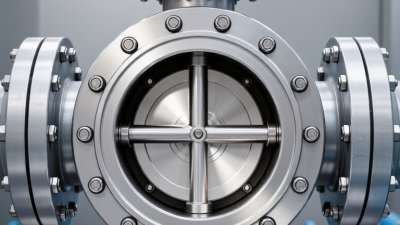
A butterfly check valve allows fluid to move in one direction and helps prevent reverse flow. Many designs use two semicircular plates mounted on a central hinge. As forward flow enters, pressure pushes the plates open, leaving a passage through the valve. When flow weakens or reverses, the plates swing back toward the seat and close. Some models use springs to assist closure. That movement matters. A slow-closing or obstructed disc may allow brief backflow, so performance depends on the valve design and operating conditions.

These valves are often compact, which can help when pipe space is limited. They are used in water, wastewater, and other compatible fluid systems, but material choice and pressure ratings must match the service. Check the flow-direction arrow before installation, and follow the manufacturer’s specified orientation; some designs are position-sensitive. During inspection, look for deposits around the hinge and wear on the seating surfaces. A clean-looking valve is not necessarily a sound one. I would also question assumptions based only on pipe size: flow rate, fluid properties, and pressure changes can affect closure and vibration. The right selection comes from the system details, not appearance alone.
How Were China’s Top 10 Manufacturers Selected?

Selecting China’s top ten butterfly check valve manufacturers calls for more than comparing catalogues. A credible review should examine product range, material options, pressure ratings, and documented quality controls. Relevant details include disc and seat materials, stated operating limits, and whether test reports can be traced to specific production batches. Small details matter.

Manufacturing capability should be assessed through evidence, such as inspection procedures, pressure-test records, and consistent dimensional checks. Technical support also counts: clear installation guidance and practical answers about flow direction or service conditions can reduce selection errors. Published specifications are useful, but they do not prove every unit performs identically. That gap deserves attention.

A balanced comparison can weigh verified production information, export experience, delivery consistency, and after-sales responsiveness. Independent records and direct technical discussions are stronger evidence than broad marketing claims. The process is not perfect; available data may differ in detail or age. Reviewers should note those limits and avoid treating a high score as a guarantee of suitability for every pipeline.

Profiles of China’s Top 10 Butterfly Check Valve Manufacturers

The ten profiles show how China’s butterfly check valve manufacturers differ in engineering focus, production scale, and quality controls. Some specialize in compact valves for water pipelines, where a light disc and a tight seat matter. Others build larger units for industrial service, with thicker bodies and stronger shafts. A few focus on customized dimensions. That can help with unusual layouts, but customization needs clear drawings and agreed tolerances.

Manufacturing capability is only part of the picture. Buyers should ask how each producer checks disc alignment, seat contact, and pressure performance. A test report is useful when it identifies the valve size, test pressure, and inspection date. Look for traceable material records, too. Small details matter. A poorly finished sealing surface may cause leakage, even when the exterior looks sound. Quality claims deserve verification.

The profiles also reveal a practical difference between catalogue breadth and proven application experience. A supplier may list many materials, yet offer limited evidence for a specific fluid or operating temperature. Request reference data for comparable service, and clarify coating, connection, and maintenance requirements. Paperwork can be incomplete; that deserves a closer look, not an assumption of failure. The best fit depends on operating conditions, not a ranking alone.

China Top 10 Butterfly Check Valve Manufacturers – Profiles of China’s Top 10 Butterfly Check Valve Manufacturers

Reference note: Company-specific rankings and manufacturer claims are not included. The entries below summarize recognized standards and technical reference points relevant to evaluating butterfly check valves and their manufacturers.

Reference Standard or Specification Relevant Scope How Buyers Can Use It
01 API 594 — Check Valves: Flanged, Lug, Wafer, and Butt-Welding Requirements for check-valve design, materials, dimensions, pressure-temperature ratings, inspection, and marking. Check whether a supplier’s butterfly-style check valve is designed and documented to the applicable API 594 requirements.
02 API 598 — Valve Inspection and Testing Inspection and pressure-test requirements for covered valve types. Request the test procedure and inspection records applicable to the supplied valve and purchase specification.
03 ISO 5208 — Industrial Valves: Pressure Testing of Metallic Valves Pressure-testing requirements for metallic industrial valves, including test procedures and acceptance criteria. Confirm the specified test level, test medium, duration, and acceptance criteria in the quotation or inspection plan.
04 ASME B16.34 — Valves: Flanged, Threaded, and Welding End Covers pressure-temperature ratings, materials, dimensions, testing, and marking for valves within its scope. Check that the valve’s pressure class, materials, and end connections match the project specification.
05 ASME B16.5 — Pipe Flanges and Flanged Fittings Defines requirements for flanges and flanged fittings in NPS 1/2 through NPS 24, including pressure classes and dimensions. Verify flange rating, facing, drilling, and dimensions against the connected piping system.
06 ASME B16.25 — Buttwelding Ends Specifies preparation of buttwelding ends for components intended for butt-welding into piping systems. Use it to check end preparation where a valve is supplied with butt-weld ends.
07 ISO 5752 — Metal Valves for Use in Flanged Pipe Systems Specifies face-to-face and center-to-face dimensions for metal valves in flanged piping systems. Compare the specified valve series and dimensions with installation space and replacement requirements.
08 EN 558 — Industrial Valves: Face-to-Face and Center-to-Face Dimensions Provides dimensional series for metal valves used in flanged pipe systems. Confirm the stated dimensional series when matching a valve to existing pipework or equipment.
09 EN 1092-1 — Flanges and Their Joints: Circular Flanges for Pipes, Valves, Fittings, and Accessories, PN Designated Specifies requirements for circular steel flanges with PN designations, including dimensions and flange types. Check compatibility when the piping system specifies EN flanges rather than ASME flanges.
10 ASTM A351/A351M — Castings, Austenitic and Austenitic-Ferritic (Duplex) Stainless Steel, for Pressure-Containing Parts Covers specified grades of cast stainless steel for pressure-containing components. Verify the exact casting grade, material certificate, and suitability for the service conditions; do not rely on a generic “stainless steel” description.

How Do Their Products, Standards, and Capabilities Compare?

Comparing China’s leading butterfly-valve manufacturers means looking beyond nominal diameter and price. Products vary in disc and seat materials, pressure classes, face-to-face dimensions, and suitability for throttling or isolation. A resilient-seated valve may suit water service, while metal-seated designs can handle hotter or more demanding duties. Fit matters. Check torque data against the actuator, especially for larger valves and frequent cycling.

Standards help make comparisons concrete. API 609 covers butterfly-valve design categories, while ISO 5208 specifies pressure testing for industrial valves; EN 593 addresses metallic butterfly valves. Ask which editions and test procedures apply to the quoted model, not merely whether a factory “meets standards.” Grand View Research’s Butterfly Valves Market report forecasts a 5.3% compound annual growth rate from 2023 to 2030, pointing to continued demand—but market growth does not prove a particular valve’s reliability.

Manufacturing capability also shows up in traceability, inspection records, and repeatable testing. Request material certificates, pressure-test results, dimensional drawings, and documented seat-leakage criteria. For critical lines, ask about cycle testing and spare-part availability. A neat catalog is not proof. Some comparisons remain imperfect because published sheets often omit endurance-test conditions or actual leakage measurements. That gap deserves a direct question before purchase.

Butterfly Valve Standards: Product Scope vs. Test Scope

Selected international standards relevant to butterfly valves. A value of 1 indicates that the standard’s primary scope covers the category; 0 indicates it does not. This is a standards reference, not a manufacturer rating or an exhaustive list.

API 609, EN 593, and MSS SP-67 address butterfly valves. API 598, ISO 5208, and EN 12266-1 provide general valve inspection or pressure-testing requirements. Confirm the applicable edition and project requirements when evaluating a specific product.

How to Choose a Chinese Butterfly Check Valve Manufacturer

When choosing a Chinese butterfly check valve manufacturer, start with the actual service conditions. Record the fluid, pressure, temperature, pipe size, and flow direction. For a pump discharge line, ask how the disc closes during a sudden flow reversal. A poorly matched valve can slam, vibrate, or wear early. Small details matter.

MarketsandMarkets estimates the global industrial valve market at USD 76.2 billion in 2023, with a forecast of USD 97.2 billion by 2028. This broad market figure does not prove a supplier’s quality. Use it as context, not a buying shortcut. Ask manufacturers for pressure-test records, material certificates, and inspection criteria tied to the quoted model. Check whether the body and disc materials suit your fluid, and confirm the stated pressure and temperature limits. Request drawings and a sample test report. Look for traceable serial numbers. Visit or independently audit the factory when the order justifies it. A polished certificate is not enough. I would also ask how the supplier handles a failed test; answers can be revealing.