
A Turbo Radiator is more than a shiny core behind the grille. It must shed heat reliably while facing vibration, pressure changes, and cramped engine bays. That matters especially in turbocharged vehicles, where compressed intake air adds thermal demand. The U.S. Department of Energy explains that turbochargers use exhaust energy to drive a compressor; the added airflow supports stronger engine output, but it also makes effective heat management essential. SAE International technical papers examine these thermal loads, while the EPA’s Automotive Trends Report tracks changes in vehicle technology and engine design. These sources offer useful context, though they do not rank radiator brands or prove that one product fits every vehicle.
A useful expert perspective comes from John B. Heywood, an MIT professor and author of Internal Combustion Engine Fundamentals. A careful paraphrase of his engine research is that performance depends on managing operating conditions—not simply increasing power. That principle helps frame this guide. The top Turbo Radiator for sale should match the vehicle, engine tune, cooling layout, and available space. Check core dimensions, mounting points, hose connections, and material quality before comparing prices. Look for clear fitment data and a credible warranty. Small details matter.
A low price can still cost time.
This overview will compare leading options by fit, construction, cooling design, and buyer support. Some product listings leave important details unclear. Treat those gaps as a reason to verify—not as proof of quality.
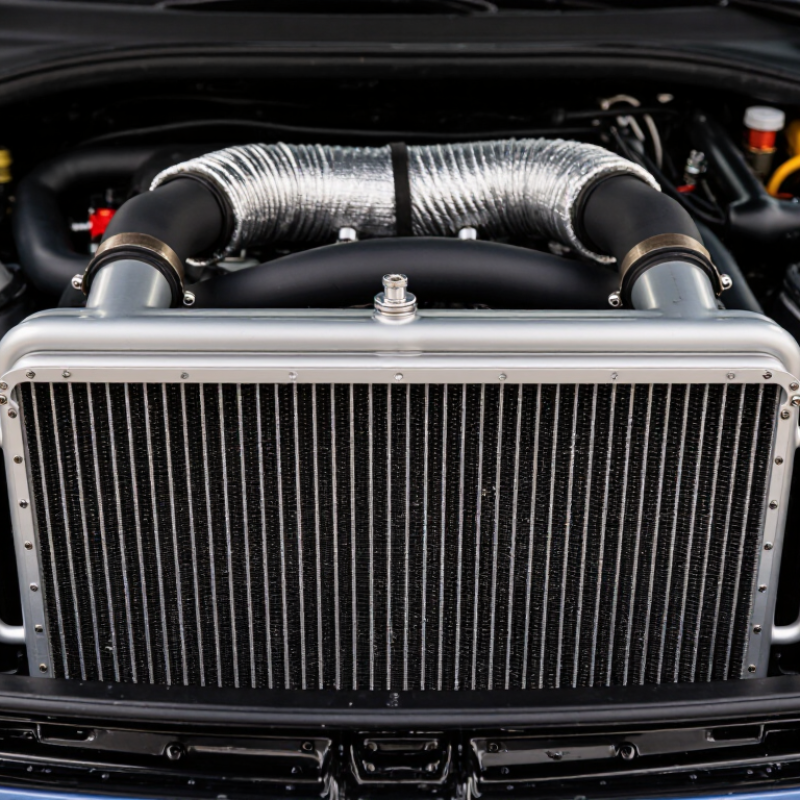
A turbo radiator is usually an upgraded engine radiator for a turbocharged vehicle. It removes heat from engine coolant as air passes through its core. The turbocharger adds heat to the engine bay, but its compressed intake air is cooled by a separate intercooler. These parts do different jobs. The U.S. Department of Energy’s fuel-energy breakdown notes that only about 12–30% of gasoline energy reaches a vehicle’s wheels; much of the remainder is lost as heat and other inefficiencies. That helps explain why dependable cooling matters, though radiator size alone cannot guarantee cooler operation.
A radiator moves hot coolant through narrow tubes and fins. Airflow across the fins carries heat away, and the cooled fluid returns to the engine. In slow traffic, an electric fan helps maintain airflow; at road speed, incoming air does much of the work. A thicker core may offer more cooling capacity, but it can also restrict airflow if poorly matched to the vehicle. Fit, fan performance, coolant flow, and pressure rating all matter. I’d treat “high-performance” labels cautiously; they do not tell the whole story.
Tips: Check the vehicle’s cooling-system requirements and available space before buying. Inspect for bent fins, leaks, and damaged hose connections. After installation, bleed trapped air and watch the temperature gauge during a real drive. Small bubbles can mislead. Don’t assume a radiator will fix every overheating problem; a thermostat, cap, fan, or intercooler issue may be involved.
Turbocharged vehicles rely on stable cooling, but “turbo radiator” can describe different parts. A standard engine radiator removes heat from coolant. A charge-air intercooler cools compressed intake air, while some vehicles also use separate oil or transmission coolers. Check which component your vehicle needs before comparing listings.
Replacement radiators are designed around the original fit and cooling capacity. Aluminum cores are common because they are light and transfer heat effectively; tank materials and construction vary. Performance radiators may have larger cores or more cooling rows, helping during towing, track use, or hot weather. More thickness is not always better. It can restrict airflow or leave too little room for fans and nearby parts.
Look closely at core dimensions, hose positions, mounting points, cap pressure rating, and fan compatibility. A unit that looks similar may still require modifications. For intercoolers, compare inlet and outlet sizes, core volume, and pressure drop; oversized cores can add lag in some setups. Keep the old part nearby while checking measurements. It’s easy to miss a small bracket. Real fitment details matter as much as advertised cooling claims.
What Are the Top Turbo Radiators for Sale?
How to Compare Turbo Radiators for Sale
When comparing radiators for turbocharged vehicles, start with exact vehicle fitment. Check the year, engine, transmission, and existing cooling-system layout. A radiator that looks close may have different hose positions or mounting points. Measure the available space, including room for the fan and shroud. Small mismatches can turn installation into a frustrating job.
Compare core dimensions, construction, and stated cooling capacity, but do not assume a thicker core is always better. Airflow, fan performance, and the vehicle’s operating conditions matter too. Look for clear specifications on materials, pressure testing, included fittings, and warranty coverage. If the vehicle is modified, ask a qualified technician whether the cooling system needs additional capacity. Bigger is not automatically safer.
Tips: Photograph hose connections before removal, then compare them with the listing. Check whether the cap, drain plug, and mounting hardware are included. Read return terms before ordering. A detail I might overlook at first is fan clearance; check it twice, especially with aftermarket parts. Short checks help. If specifications are vague, request measurements rather than relying on product photos.
The right radiator depends on vehicle fitment, cooling demand, airflow, and installation space. Compare construction and suitability rather than relying on core thickness or row count alone.
| Radiator Type | Typical Construction | Key Advantages | Considerations | Best Suited For | What to Check Before Buying |
|---|---|---|---|---|---|
| OEM-style replacement | Often an aluminum core with plastic tanks; some applications use other factory-style constructions. | Designed around the vehicle’s original mounting points, hose connections, and cooling system layout. | Capacity and materials vary by application. Confirm that the unit matches the original specification. | Daily-driven vehicles with standard cooling requirements or a failed original radiator. | Year, make, model, engine, transmission-cooler connections, inlet and outlet positions, and mounting points. |
| All-aluminum radiator | Aluminum core and tanks, commonly joined by brazing or welding. | Eliminates plastic end tanks and can be lighter than a comparable copper-brass design. | Fit, core design, workmanship, and pressure rating matter; aluminum construction alone does not guarantee better cooling. | Modified vehicles or owners seeking an all-metal radiator where a compatible application is available. | Overall dimensions, core dimensions, tank clearance, hose locations, fan-shroud compatibility, and stated pressure rating. |
| Copper-brass radiator | Copper tubes and fins with brass tanks; construction and repairability depend on the specific design. | Copper has higher thermal conductivity than aluminum as a material, and some designs can be serviced by specialist radiator shops. | May weigh more than an aluminum alternative. Complete radiator performance also depends on tube, fin, and airflow design. | Applications where a compatible copper-brass unit is specified or specialist repair options are important. | Vehicle fitment, condition or manufacturing details, tank and core design, and local repair support. |
| High-capacity performance radiator | May use a larger core, wider tubes, revised fin design, or other changes compared with a standard replacement. | Can provide more cooling capacity when the design suits the vehicle and receives adequate airflow. | A thicker or multi-row core is not automatically more effective; it can affect airflow, fan clearance, and fitment. | Vehicles with sustained high engine loads, towing demands, or increased heat output. | Core dimensions, tube and fin design where specified, fan and shroud clearance, airflow path, and cooling-system requirements. |
| Slimline radiator | Lower-profile core and tanks intended for installations with limited space. | Can help where engine-bay clearance is restricted or where a particular front-end layout requires a compact unit. | Reduced size may limit cooling capacity; suitability depends on the engine’s heat load and available airflow. | Custom builds or vehicles with tight clearance around the engine, fans, or other components. | Available space, mounting method, fan placement, hose routing, and whether the cooling capacity is suitable for the application. |
| Radiator with integrated transmission cooler | Includes an internal cooler connection or heat exchanger for compatible automatic-transmission applications. | Can keep the transmission-cooling circuit integrated with the radiator installation. | Not suitable for every transmission setup. Some vehicles use a separate cooler or different connection arrangement. | Vehicles whose original configuration uses a radiator-mounted transmission cooler. | Transmission type, cooler port thread and position, line compatibility, and whether the vehicle requires an internal cooler. |
Comparison tip: Verify exact vehicle fitment and measurements first. Cooling performance depends on the full system—including airflow, fans, shrouding, coolant flow, and engine condition—not radiator material or row count alone.
Choosing a turbo radiator starts with your engine’s actual heat load, not the largest core that fits. Turbocharging adds heat to the cooling system, especially during long climbs, towing, or stop-and-go driving after a hard run. Check the vehicle’s original radiator dimensions, hose positions, fan clearance, and transmission-cooler connections. A thicker core can help, but it may restrict airflow if the fan and shroud are poorly matched. Fit matters. I’d verify clearance with the engine cold, then recheck after installation; small oversights happen.
Coolant choice matters too. The ASHRAE Handbook—Fundamentals lists a specific heat near 3.3 kJ/kg·K for a 50/50 ethylene-glycol and water mixture at about 20°C, compared with water’s roughly 4.18 kJ/kg·K. That means coolant mixture and flow affect how much heat the system can carry. Follow the vehicle maker’s specified coolant and pressure rating, and look for a radiator tested for pressure integrity and leak resistance. ASTM D3306 sets performance requirements for glycol-based engine coolants, but it does not establish that every radiator fits every turbocharged vehicle. Compare core dimensions and stated cooling capacity carefully. For modified engines, ask a qualified cooling-system technician to assess airflow and heat load; catalog fitment alone can miss the real problem.
Choosing a turbo radiator for sale involves more than matching the vehicle model. Confirm the core dimensions, hose positions, mounting points, and compatibility with the engine’s cooling system. Turbocharged engines can produce substantial heat under load, so check the radiator’s construction and rated pressure against the vehicle manufacturer’s specifications. A larger core is not automatically better if it blocks airflow or does not fit correctly.
Installation details matter. Work only when the engine is completely cool, and inspect hoses, clamps, the thermostat, and the fan while the radiator is accessible. Seat connections squarely to avoid leaks, then refill with the specified coolant mixture. Bleed trapped air according to the vehicle service procedure; an air pocket can cause unstable temperatures. After installation, monitor the temperature gauge and inspect joints for seepage during several heat cycles. Even careful installers can overlook a loose clamp, so rechecking is worthwhile.
Tips: Keep the old and new units side by side to compare fittings before installation. Small leaks matter. Never open a hot cooling system. If the temperature rises unexpectedly or bleeding remains difficult, stop driving and consult a qualified technician. A small amount of uncertainty is normal; guessing at coolant type or pressure limits is not worth the risk.
Coolant concentration is an important consideration when installing or maintaining a turbocharged vehicle’s radiator. These approximate values show the freeze protection of ethylene glycol mixtures by volume. A 50/50 mix is commonly used, but always follow the vehicle and coolant manufacturers’ specifications; higher concentrations are not necessarily better.