What Are the Top PRV Valve Types in 2026?

A pressure relief valve is a small component with a demanding job: it must respond when pressure rises, then reseat as intended. In 2026, choosing a PRV means looking beyond the product label. Set pressure, relieving capacity, operating medium, temperature, backpressure, and connection details all matter. A mismatch can affect performance, even when the valve appears suitable on paper.

This guide compares common PRV valve types, including spring-loaded, pilot-operated, and balanced-bellows designs. It considers where each type may fit, what trade-offs buyers should assess, and which details deserve closer review before specifying equipment. The right choice depends on the system—not on a trend or a single feature. Small differences matter.

John C. H. Soares is known for work on pressure-relief systems, but no verified quotation from him was provided for this introduction. Rather than inventing one, this guide uses a practical editorial principle: “Select the valve for the real operating conditions, not the name on its label.” Treat that sentence as a summary, not a direct quotation. Confirm final selections against current manufacturer data and applicable engineering requirements.
What Are the Top PRV Valve Types in 2026?

How Pressure-Reducing Valves Work and Where They Are Used

What Are the Top PRV Valve Types in 2026?

How Pressure-Reducing Valves Work and Where They Are Used

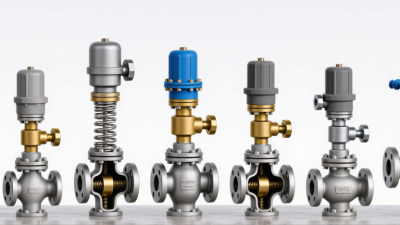
Pressure-reducing valves lower a high, fluctuating inlet pressure to a safer, steadier outlet pressure. A direct-acting valve uses a spring and diaphragm: downstream pressure pushes against the spring, adjusting the valve opening. Pilot-operated designs use a smaller control valve to regulate a larger main valve, often suiting higher flow or changing demand. Differential-pressure regulators control the pressure gap across equipment rather than one fixed outlet pressure. Small details matter. A blocked strainer or poorly placed sensing line can undermine performance.

PRVs are common on building water services, steam distribution, process lines, and compressed-air systems. In a steam network, they can supply lower-pressure equipment while upstream piping remains at higher pressure. The U.S. Department of Energy’s Improving Steam System Performance: A Sourcebook for Industry estimates that steam accounts for roughly 30% of U.S. industrial energy use. Its 2015 Quadrennial Technology Review puts industry’s share of national energy use at about one-third. These figures describe the broader systems, not guaranteed PRV savings. Correct sizing, a stable outlet-pressure target, and routine checks matter. Not always simple. A valve selected only by pipe size may hunt, whistle, or fail to hold pressure when demand shifts.
Direct-Acting PRVs: Design, Benefits, and Typical Applications

Direct-Acting PRVs: Design, Benefits, and Typical Applications

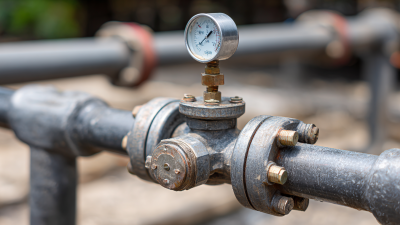
A direct-acting pressure-reducing valve uses downstream pressure to move a diaphragm or piston against a spring. As outlet pressure falls, the valve opens; as pressure rises, it throttles flow. The mechanism needs no external pilot line, making the assembly compact and relatively simple to install. Simple, but not crude. A gauge after the valve helps operators check the set pressure under real operating conditions.

Direct-acting PRVs are common on small steam branches, building water lines, and compressed-air drops where demand and flow are moderate. They respond quickly to changing outlet pressure and typically need less space than pilot-operated designs. The U.S. Department of Energy’s Improving Steam System Performance: A Sourcebook for Industry reports that steam systems account for about 30% of energy used in U.S. manufacturing. That figure describes the scale of steam use, not savings a PRV can guarantee; sound pressure control still depends on correct sizing and installation.

These valves have limits. Large flow changes or demanding pressure accuracy may call for another design. I would not treat “simple” as “set and forget”: dirty fluid, an undersized valve, or poor sensing conditions can cause unstable control. A strainer, suitable piping, and periodic checks matter. The best choice depends on the actual load profile.

Direct-Acting PRVs: Typical Pressure–Flow Behavior

A direct-acting pressure-reducing valve uses downstream pressure against a spring-loaded diaphragm or piston to regulate its outlet pressure. Its compact, simple design is commonly suited to point-of-use control and low-to-moderate flow applications.

The curve is a normalized schematic illustrating pressure droop as flow demand increases; it is not measured test data or a specification for a particular valve. Actual performance depends on valve sizing, fluid, set pressure, and operating conditions.

Pilot-Operated PRVs: How They Differ from Direct-Acting Models

What Are the Top PRV Valve Types in 2026?

Pilot-Operated PRVs: How They Differ from Direct-Acting Models

Pilot-operated pressure-reducing valves use a small pilot valve to control a larger main valve. This design can handle higher flow rates and maintain steadier downstream pressure when demand changes. It is often suited to larger systems with consistent flow. Direct-acting models work differently: a spring and diaphragm respond directly to downstream pressure. Their simpler construction can make them easier to install and maintain, especially on smaller lines. No type wins everywhere.

During commissioning, watch how the outlet gauge responds as flow rises and falls. A pilot-operated valve may regulate closely, but it usually needs adequate inlet pressure and clean fluid. Debris can interfere with the pilot passage. Direct-acting valves are generally less complex, though outlet pressure may drop as flow increases. That trade-off is easy to overlook. I’d check the valve’s operating range, flow data, and maintenance access before choosing; a neat catalog rating is not the whole installation.

Tips: Confirm minimum differential pressure and expected flow with the valve documentation. Add suitable filtration if the system needs it, and verify pressure settings under real operating conditions. Small details matter.

Specialized PRVs: Differential-Pressure, Back-Pressure, and Smart Types

Specialized pressure-reducing valves solve different control problems, so the label alone is not enough. A differential-pressure PRV maintains a selected pressure difference across a coil, filter, or heat exchanger. In a hydronic loop, this can limit flow swings when nearby control valves open and close. Set the differential too high, though, and noise or excess flow may remain. Small details matter.

A back-pressure valve works differently: it throttles an outlet to keep upstream pressure near a set point. This can help in circulation lines, process vessels, and systems that need stable upstream conditions. It is not simply a relief valve; relief devices discharge pressure during specified abnormal conditions. Selection should account for the fluid, temperature, pressure range, and consequences of a valve sticking.

Smart PRVs add sensors and electronic control, sometimes providing pressure trends, alarms, or remote set-point changes. They may reveal a slow drift before a technician hears a pump change pitch. But connectivity cannot replace correct sizing, commissioning, or routine inspection. I would still compare sensor readings with a calibrated gauge. Sensors age, and dashboards can look reassuring while being wrong. That check is easy to overlook.

How to Choose a PRV Type for a System in 2026

Choosing a PRV type starts with the service, not the catalog. For clean water or air at modest flow, a direct-acting valve is compact and simple to maintain. Pilot-operated valves usually suit higher flows or tighter pressure control, but their pilot passages need clean fluid. A back-pressure valve controls upstream pressure; a differential-pressure type maintains a set pressure difference across equipment. Match the valve to the medium, inlet range, outlet setpoint, flow variation, and required turndown. Check sizing against the manufacturer’s certified flow data and applicable engineering standards.

For steam systems, the U.S. Department of Energy’s 2002 Steam System Opportunity Assessment estimated that steam generation uses about 37% of fossil fuel consumed by U.S. manufacturers. That scale makes correct pressure control worth careful review. Oversizing can cause unstable control at low demand; undersizing can starve equipment during peaks. Record operating pressure and flow at both ends of the line, then check noise, temperature, condensate, and downstream relief protection. A valve chart alone rarely tells the whole story.

Tips: Photograph the pressure gauges during peak and low demand. Compare those readings with the valve’s stated operating range, and ask a qualified engineer to review uncertain cases. One detail is easy to miss: a dirty strainer can look like a valve-sizing problem.

What Are the Top PRV Valve Types in 2026? — How to Choose a PRV Type for a System in 2026

Pressure relief valve (PRV) type comparison and selection guide

PRV Type How It Works Best Suited For Advantages Key Limitations Selection Considerations
Conventional spring-loaded Process pressure acts directly on the disc against a spring. The valve opens when inlet pressure reaches its set pressure. General liquid, gas, or vapor service where discharge backpressure is low and reasonably stable. Simple design, broad availability, and comparatively straightforward maintenance. Built-up backpressure can affect opening pressure and capacity; performance can be less suitable when backpressure varies substantially. Check allowable backpressure, set pressure, required relieving capacity, fluid phase, and applicable code requirements.
Balanced bellows A bellows reduces the effect of backpressure on the valve’s spring loading; the bonnet may also be vented, depending on design. Applications with variable or higher superimposed backpressure, or where isolating the spring and guiding parts from the process is useful. Can help maintain more consistent set-pressure performance as backpressure changes; may protect internal components from corrosive process media. Bellows integrity is critical. A failed bellows can affect operation; venting and inspection requirements must be considered. Confirm the manufacturer’s backpressure limits, bellows material compatibility, vent arrangement, and maintenance plan.
Balanced piston A piston arrangement is used to reduce the influence of backpressure on the moving valve assembly. Selected services requiring a balanced design where the specific valve construction is approved for the operating conditions. Can provide backpressure compensation without a metal bellows in designs intended for that purpose. Availability and performance depend on design; seals and sliding parts may require attention in service. Verify the exact design’s certifications, leakage characteristics, fluid compatibility, and allowable backpressure with the manufacturer.
Pilot-operated A pilot senses system pressure and controls the main valve, which is opened by the pressure differential acting on its internal components. Systems needing close operation near set pressure, high capacity, or a design suited to specified backpressure conditions. Can offer tight operating characteristics and high capacity relative to connection size in suitable applications. More complex than direct spring-loaded designs; small passages and pilot components may be sensitive to contamination or unsuitable service conditions. Assess fluid cleanliness, pilot configuration, inlet pressure losses, backpressure, fail-safe behavior, and maintenance capability.
Temperature-activated relief valve A temperature-responsive element opens a relief path when temperature reaches its specified activation condition; some designs are intended for thermal expansion protection. Small liquid-filled sections that can become overpressurized due to trapped-liquid thermal expansion, where the design is approved for the duty. Can address a localized thermal-expansion hazard in an appropriately designed system. Not a substitute for a correctly sized pressure safety valve where protection against general overpressure is required. Confirm the hazard, activation mechanism, discharge destination, fluid compatibility, and applicable system rules.
Choosing a PRV: Establish the credible overpressure scenarios and required relieving capacity first. Then evaluate set pressure, allowable accumulation, inlet pressure loss, superimposed and built-up backpressure, fluid phase and properties, materials, discharge routing, inspection needs, and the codes applicable to the installation. Confirm final sizing and certification against the governing requirements and the valve manufacturer’s data.