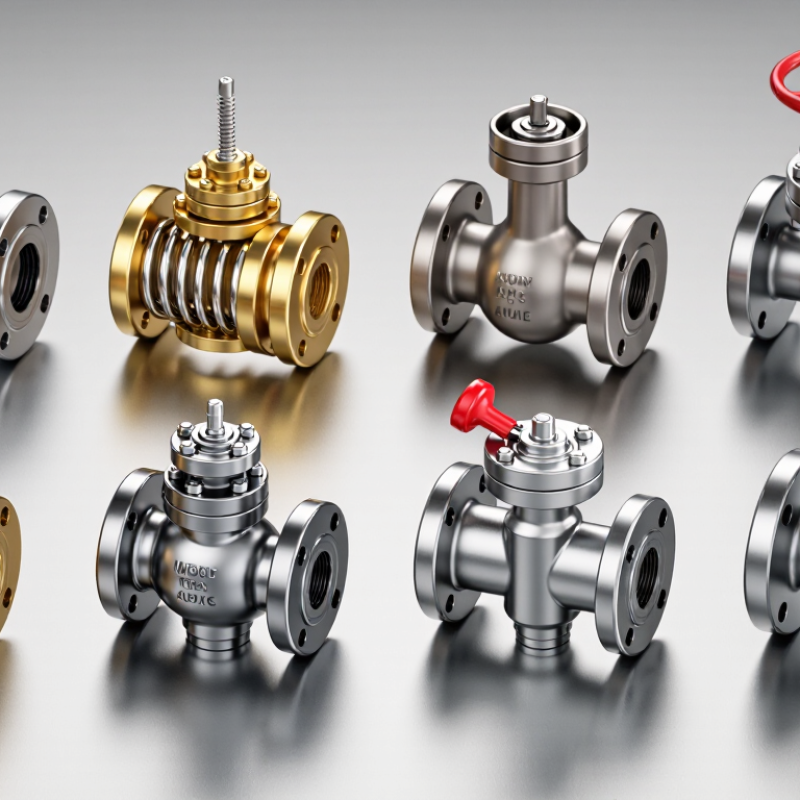
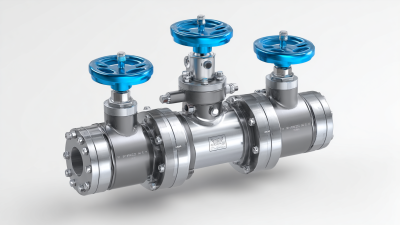
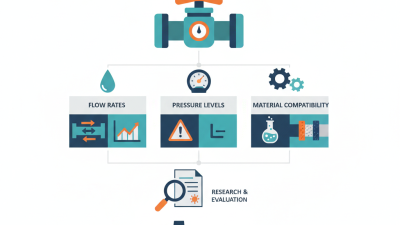
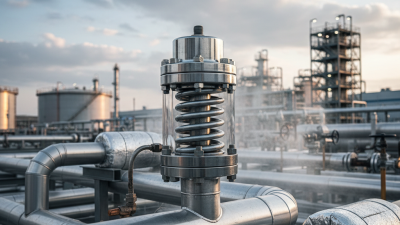
Choosing the right dual check valve is rarely a simple catalog decision. Global buyers must compare flow direction, pressure rating, temperature, media, installation space, and maintenance access. A compact wafer valve may fit between two flanges, while a spring-loaded model can respond faster in a vertical pipeline. Small details matter. A few millimeters can affect installation.
Dr. A. R. D. Thorley, a recognized authority on fluid transients, offers a valuable principle: “Check valve selection must consider transient behavior, not only steady flow.” This reminder is important because water hammer may appear only after shutdown, when the pump stops and the pipeline suddenly falls silent. The best dual check valve is not always the cheapest or largest option. It must match the system’s actual behavior.
This guide introduces ten common types for international purchasing teams. It considers wafer, flanged, threaded, spring-assisted, swing, lift, silent, foot, sanitary, and dual-plate designs. Each type has practical strengths and limitations. Some reduce reverse flow effectively. Others create higher pressure loss or require cleaner media. None is perfect.
The comparison also highlights body materials, seal choices, connection standards, testing records, and supplier documentation. These details support safer specifications and more reliable purchasing decisions. However, product names can vary between regions, and supplier claims may not always explain field performance clearly. Buyers should verify certified data, installation orientation, and operating conditions before approval. A careful review today can prevent leakage, vibration, and costly downtime later.
A dual check valve is a compact backflow-control device with two independent check mechanisms in one body. Each mechanism permits flow in one direction and closes when pressure reverses. This layered design helps protect pumps, pipelines, and clean-water lines from unwanted return flow.
In practical selection work, the “top ten types” often reflect different designs, connections, materials, and service conditions. Common examples include spring-loaded, ball, piston, wafer, threaded, flanged, silent, lift, diaphragm, and sanitary versions. Forward pressure opens the checks. Reverse pressure closes them. However, every extra check also adds pressure loss. That detail is easy to overlook. A valve that works well on a small dosing line may restrict a larger process pipe.
Tips: Confirm the fluid, operating pressure, temperature, pipe size, and installation direction. Check the manufacturer’s flow data, not only the nominal diameter. Leave enough access for inspection and replacement. During commissioning, watch for rattling, slow pressure recovery, or unexpected pump noise. These signs may indicate turbulence, debris, or incorrect sizing. A field test is worthwhile, because catalog assumptions rarely match every installation.
Top 10 Types of Dual Check Valves for Global Buyers
A dual check valve uses two independent check elements inside one body. Each element usually includes a disc, seat, guide, and spring. Some designs use poppets, while others use hinged discs. The flow arrow on the body shows the intended direction. During forward flow, pressure lifts the first disc, then opens the second. When pressure falls, both springs push the discs back onto their seats. This staged action reduces reverse flow risk. It also limits water hammer compared with a single, heavy disc in some applications. Flow paths vary by design, including straight-through, angled, and compact wafer arrangements.
Tips: Check the media, pressure, temperature, and installation direction. Keep enough clearance for maintenance. A clean seat matters. Even small debris can prevent tight closure. For liquid systems, examine pressure loss at the expected flow rate, not only the maximum rating. For gas service, confirm sealing performance under low differential pressure.
In field inspections, I have found that valve behavior is rarely as tidy as a catalog diagram. Pipe vibration, poor alignment, and sudden pump shutdowns can change the response. Two check elements do not guarantee zero leakage. Seat wear, spring fatigue, or trapped particles still require attention. Buyers should compare the internal flow path with the actual piping layout. A shorter valve may save space, but it can increase turbulence. That trade-off is easy to overlook. Rechecking assumptions before purchase is worthwhile.
| No. | Dual Check Valve Type | Typical Construction | Core Components | Opening and Closing Mechanism | Normal Flow Path | Typical Applications | Key Selection Considerations |
|---|---|---|---|---|---|---|---|
| 1 | Threaded Inline Spring-Loaded Dual Check Valve | Two check elements installed in series inside a compact threaded body, commonly with female pipe threads. | Body, two discs or poppets, two springs, guides, seats, seals, and threaded end connections. | Line pressure compresses each spring and lifts both check elements from their seats. Reverse pressure allows the springs to reseat the elements independently. | Inlet → first check opens → internal chamber → second check opens → outlet. Reverse flow is blocked at the first check that closes. | Potable-water branches, appliance connections, small process lines, irrigation equipment, and general plumbing. | Confirm thread standard, pressure rating, temperature range, elastomer compatibility, and required flow capacity. |
| 2 | Flanged Dual Check Valve | Two independently operating check assemblies housed in a larger body with flanged pipe ends. | Flanged body, paired check discs or poppets, springs, seats, guides, gaskets, and flange connection hardware. | Forward differential pressure opens both checks. When flow stops or reverses, the springs and reverse pressure close the checks to limit backflow. | Upstream flange → check 1 → intermediate cavity → check 2 → downstream flange. | Commercial water systems, industrial utility lines, pump discharge piping, and larger-diameter installations. | Evaluate face-to-face length, flange drilling, allowable pressure loss, maintenance access, and pipe-support requirements. |
| 3 | Wafer-Style Dual Check Valve | Short-pattern valve fitted between matching flanges; two compact spring-assisted plates or poppets are arranged in series. | Wafer body, dual plates or poppets, hinge or guide elements, springs, seats, and flange gaskets. | Flow pushes the plates or poppets away from their seats. Springs drive the elements toward the closed position when velocity falls. | Upstream flange → first wafer check → central passage → second wafer check → downstream flange. | Space-limited water, HVAC, cooling-water, and general industrial piping systems. | Check flange alignment, minimum pipe size, installation orientation, closing speed, and sensitivity to debris. |
| 4 | Cartridge-Style Dual Check Valve | Replaceable internal cartridge containing two check stages, installed within a host body or manifold. | Cartridge shell, two poppets, springs, precision seats, O-rings, guides, and retaining components. | Each poppet responds to its own pressure differential. The spring-loaded stages close separately, providing redundant non-return protection. | Inlet port → cartridge check stage 1 → cartridge cavity → check stage 2 → outlet port. | Compact manifolds, fluid-control equipment, mobile machinery, and systems requiring simplified internal replacement. | Verify cartridge interchangeability, seal material, service access, insertion depth, and cleanliness requirements. |
| 5 | Hose-Connection Dual Check Valve | Compact valve with a hose-thread or hose-union connection and two internal non-return elements. | Body, hose-end connection, two spring-loaded check elements, seats, springs, and sealing washers or O-rings. | Water pressure opens both checks during use. When the hose or downstream pressure changes, both spring-loaded elements close to reduce reverse flow. | Supply connection → first check → short internal passage → second check → hose outlet. | Outdoor faucets, utility sinks, washing equipment, hose-connected appliances, and temporary water connections. | Confirm hose-thread dimensions, maximum working pressure, temperature, drainage behavior, and local backflow rules. |
| 6 | Low-Cracking-Pressure Dual Check Valve | Two check stages designed with light springs, optimized poppet geometry, or larger effective flow areas. | Low-force springs, guided poppets, precision seats, body, seals, and flow-conditioning passages. | A small forward pressure differential is sufficient to lift both check elements. Reverse pressure or spring force closes each stage. | Inlet → first low-force check → intermediate chamber → second low-force check → outlet with a low opening threshold. | Low-pressure fluid circuits, chemical dosing equipment, sampling lines, medical or laboratory equipment, and sensitive instruments. | Compare cracking pressure with available pump head, flow rate, viscosity, leakage specification, and orientation limits. |
| 7 | High-Temperature Metal-Seated Dual Check Valve | Dual check construction using metal seats and heat-resistant metallic internal components instead of soft elastomeric seats. | Metal body, two metal poppets or discs, springs, guides, metal seats, and high-temperature packing or seals where required. | Pressure lifts both metal-seated check elements. Springs and reverse pressure return the elements to their seats after forward flow stops. | Hot-fluid inlet → metal check stage 1 → internal cavity → metal check stage 2 → outlet. | Steam-related auxiliary services, hot oil, high-temperature process fluids, and applications where soft seats may degrade. | Check temperature-pressure derating, thermal expansion, seat leakage class, corrosion resistance, and thermal shock limits. |
| 8 | Corrosion-Resistant Plastic Dual Check Valve | Body and internal wetted parts made from chemically resistant thermoplastics, often with non-metallic or coated springs. | Plastic body, dual polymer or coated poppets, springs, seats, guides, and chemically compatible seals. | Forward pressure opens both lightweight check elements. Springs and differential pressure close them when flow reverses. | Chemical inlet → first polymer check → internal passage → second polymer check → downstream process line. | Water treatment, chemical dosing, electroplating, laboratory systems, and corrosive low-to-moderate pressure fluids. | Validate chemical compatibility, permeation, ultraviolet exposure, temperature, pressure, and mechanical impact resistance. |
| 9 | Sanitary Dual Check Valve | Hygienic valve with polished wetted surfaces, cleanable geometry, and sanitary clamp or weld-end connections. | Sanitary body, two hygienic poppets or discs, springs, polished seats, guides, and food- or pharmaceutical-grade seals. | Product pressure opens the two check stages. On flow interruption, the spring-loaded elements close while minimizing retained product in suitable designs. | Process inlet → hygienic check 1 → cleanable intermediate cavity → hygienic check 2 → process outlet. | Food and beverage processing, pharmaceutical utilities, biotechnology systems, and hygienic water circuits. | Review surface finish, clean-in-place requirements, drainability, seal certification, dead-leg geometry, and allowable pressure drop. |
| 10 | Pilot-Operated or Controlled Dual Check Assembly | Two primary check elements combined with a pilot, sensing, or controlled pressure arrangement for specialized flow management. | Primary check stages, springs, pilot passages, sensing chamber, control components, seats, seals, and service ports. | Line pressure normally controls opening and closing of the primary checks. A pilot circuit can influence unloading, closing response, or pressure balance. | Inlet → primary check 1 → controlled intermediate chamber → primary check 2 → outlet; pilot passages regulate pressure around the checks. | Specialized hydraulic systems, pump protection, high-pressure process services, and installations requiring controlled closing behavior. | Assess control-line reliability, pilot-fluid compatibility, failure mode, response time, maintenance complexity, and pressure transients. |
Top 10 Types of Dual Check Valves for Global Buyers
Dual check valves use two independent closing elements to reduce reverse flow risk. Their design affects pressure loss, installation space, and maintenance needs. Wafer dual check valves suit compact pipelines, especially chilled-water and process systems. Flanged dual check valves offer stronger connections for larger industrial lines. Threaded models work well on small-diameter plumbing and compressed-air pipes.
Double-door dual check valves close quickly in water treatment and fire-protection piping. Swing dual check valves handle steady flow in wastewater and irrigation systems. Lift dual check valves provide reliable sealing in steam, oil, and high-pressure service. Ball dual check valves are useful for dirty liquids because the ball can tolerate moderate solids. Spring-loaded dual check valves respond quickly in pump discharge lines. Silent or nozzle-type valves reduce water hammer in long pipelines.
Diaphragm dual check valves protect sensitive systems, including drinking-water equipment and chemical dosing lines. Piston dual check valves support high-pressure gas and hydraulic applications when guided movement is necessary. Foot dual check valves keep pump suction lines primed in wells, tanks, and drainage systems. Vacuum dual check assemblies help prevent reverse air movement in selected low-pressure networks. Application details matter. A valve that performs well on clean water may fail early with abrasive slurry. Engineers should verify media compatibility, temperature, pressure, flow direction, and local approval requirements. Field measurements are still essential; catalogue assumptions can be wrong.
For global buyers, the top 10 dual check valve types include wafer, lug, flanged, swing, dual-plate, spring-loaded, non-slam, axial, lift, and nozzle designs. Selection starts with pressure rating, not catalog appearance. A valve marked Class 150 may suit moderate service, but temperature can reduce its allowable pressure. Always verify the pressure-temperature table.
Materials must match the fluid and the installation environment. Stainless steel supports corrosive water and many chemical services. Ductile iron can reduce cost in general water systems, while carbon steel suits stronger mechanical demands. Seat materials also matter. Elastomers may harden, swell, or lose sealing performance. I have seen buyers specify the body correctly but overlook the seat temperature range. That mistake is expensive.
Size affects velocity, noise, and pressure loss. Oversizing may delay closure and increase reverse flow. Undersizing can create turbulence. ASME B16.34 covers pressure-temperature ratings and testing requirements for many valve designs. API 6D and ISO 5208 provide widely used inspection and leakage references. The U.S. Department of Energy reports that compressed-air leaks can waste 20–30% of compressor output, showing why leakage control deserves attention. A 2024 Grand View Research report valued the global industrial valves market at over USD 78 billion in 2023. That scale reflects demand, not proof of suitability. Buyers should compare actual media, flow, temperature, pressure, end connections, and local standards before approval.
Representative pressure-rating ceilings by valve type, with selection factors including materials, sizes, and applicable standards.
The values show indicative maximum pressure ratings commonly available in industrial specifications, expressed in bar. Actual ratings depend on body material, temperature, end connection, seat design, and the selected pressure class. Buyers should verify the final specification against API 594, EN 12334, ASME B16.34, and ISO 5208 where applicable.
Global buyers often compare ten dual check valve configurations: wafer, flanged, threaded, grooved, swing, lift, piston, ball, diaphragm, and spring-loaded dual-plate designs. Each suits different pipe sizes, pressure classes, fluids, and installation spaces. A compact wafer valve may fit between flanges, while a flanged model can simplify removal during scheduled maintenance.
Ask suppliers for material certificates, pressure-test reports, dimensional drawings, and traceable serial records. Confirm compliance with applicable standards, such as API 594, ISO 5208, EN 12266, or relevant ASME requirements. Certificates alone are not enough. Their scope, test pressure, and issuing laboratory should match the purchase specification. Suppliers should explain seat materials, spring alloys, temperature limits, and replacement-part availability. An independent inspection can expose coating damage or incorrect markings before shipment.
Installation errors cause many failures. Check the flow arrow, clean the pipe bore, and support heavy adjoining pipework. Keep the valve centered between flanges; forced alignment can distort the body. Leave access for bolt removal and inspection. Fit matters. During commissioning, increase flow gradually and listen for chattering or water hammer. Maintenance teams should inspect discs, hinges, springs, seats, and external leakage at defined intervals. Record opening pressure and test results after servicing. In corrosive service, visual checks may be insufficient, so thickness measurement or material verification may be worthwhile. Local regulations and site conditions vary, and a standard selection that worked elsewhere may still need reconsideration.