2026 Top Control Valve Types and Their Applications?
In the industrial sector, control valves are crucial components for managing fluid dynamics. According to a recent report by Global Market Insights, the control valve market is projected to reach $12 billion by 2026. This growth is largely driven by increased automation in various industries. Companies harness control valves to ensure safety, efficiency, and reliability.
Different types of control valves play significant roles in several applications. For example, globe valves are favored for their precise flow control capabilities. Butterfly valves are popular due to their compact design and cost-effectiveness. However, not every control valve fits every application. Users must understand the specific needs of their processes.
Despite advancements, challenges remain in selecting the appropriate control valve. Many industries face issues such as energy inefficiency and improper valve sizing. These factors can hinder optimal performance. Thus, a deep understanding of control valve types and their applications is essential to mitigate risks and enhance productivity.

Overview of Control Valves and Their Importance in Industries
Control valves play a pivotal role in various industries, ensuring optimal fluid control. According to a report by MarketsandMarkets, the global control valves market is projected to reach USD 10.35 billion by 2026. This growth highlights the increasing demand for efficient fluid management systems.
In industries like oil and gas, control valves regulate flow and pressure. They help maintain operational efficiency and safety in critical processes. For example, in refining, a 1% improvement in flow control can lead to significant cost savings. However, the right valve selection remains a challenge. Many companies struggle to identify the appropriate valve type for specific applications.
Moreover, the importance of regular maintenance cannot be overlooked. A study from the International Society of Automation found that nearly 25% of valve failures stem from poor maintenance practices. This statistic emphasizes a need for proactive strategies to avoid costly downtimes. While advancements in smart valve technologies show promise, the industry must keep refining its approach to valve management.
2026 Control Valve Types and Their Applications
This chart illustrates the distribution of various control valve types used in industries in 2026 and their respective applications. The data indicates the prominence of each valve type based on typical use cases across different sectors.
Different Types of Control Valves: A Comparative Analysis
When it comes to control valves, understanding their types is essential. Different types serve diverse applications across various industries. Each valve type has its unique function and design. For instance, globe valves are prominent for throttling flow. They provide good control but can suffer from high pressure drops. Butterfly valves, on the other hand, are efficient for large volumes. They have quick opening and closing times, yet they may not handle fine control effectively.
Another crucial type is the ball valve. Known for its durability, it offers tight sealing and low resistance. However, its inability to modulate flow precisely can be a limitation in certain scenarios. Gate valves are often used in on-off applications. They excel in full open or closed positions. But, they do not perform well in throttling service, leading to potential issues.
The choice of control valve impacts system efficiency. Each type brings strengths and weaknesses. It’s important to assess specific application needs. Sometimes, a hybrid approach using multiple valve types may be necessary. Finding the right balance requires careful thought. Understanding these nuances can lead to better operational outcomes.
2026 Top Control Valve Types and Their Applications
| Control Valve Type |
Applications |
Advantages |
Disadvantages |
| Globe Valve |
Flow regulation, shut-off operations |
Excellent throttling capabilities |
High pressure drop, larger size |
| Ball Valve |
Quick shut-off, on/off control |
Low pressure drop, compact size |
Less effective for throttling |
| Butterfly Valve |
Large volume flow control, isolation |
Lightweight, simple design |
Limited throttling |
| Diaphragm Valve |
Corrosive fluid handling, sanitary applications |
Excellent for controlling corrosive materials |
Limited pressure and temperature ranges |
| Control Valve |
Process control in various applications |
Precise control of flow and pressure |
Complex system requirements |
Applications of Control Valves in Various Sectors
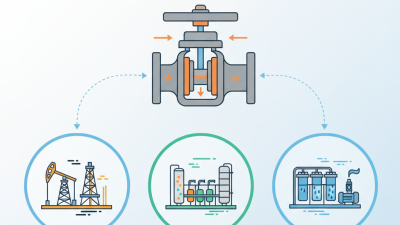
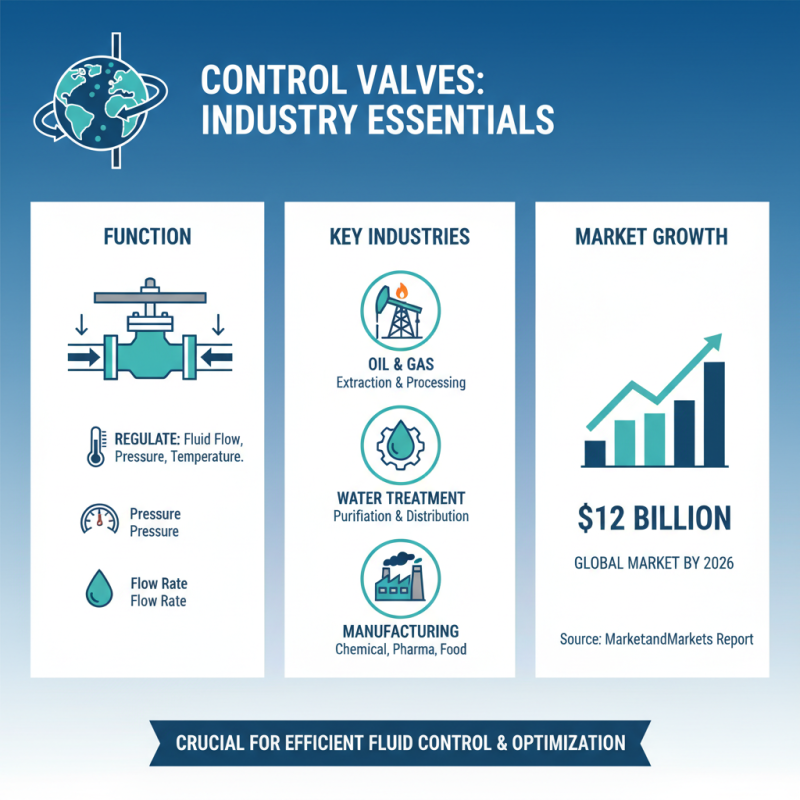
Control valves play a crucial role across various industries, from oil and gas to water treatment. These devices regulate fluid flow, pressure, and temperature. In the oil and gas sector, for example, control valves manage the flow of crude oil and natural gas during extraction and processing. According to a report by MarketsandMarkets, the global control valve market is expected to reach $12 billion by 2026. This growth reflects the increasing demand for effective flow control in numerous applications.
In water treatment facilities, control valves help optimize the treatment process. They adjust the flow rates of water and chemicals, ensuring efficient purifying and distribution systems. A study from the American Water Works Association highlights that nearly 70% of water treatment facilities now rely on advanced control valve technologies. This trend showcases the industry's shift towards automation and improved efficiency.
Tips: Regular maintenance of control valves is vital. Inspect them frequently to avoid unexpected shutdowns. Understand the specific needs of your application to select the right valve type. Determining the correct size and type can prevent costly mistakes. Engaging with industry experts is beneficial yet often overlooked. Seeking guidance can improve your system's performance significantly.
Factors Influencing the Selection of Control Valve Types
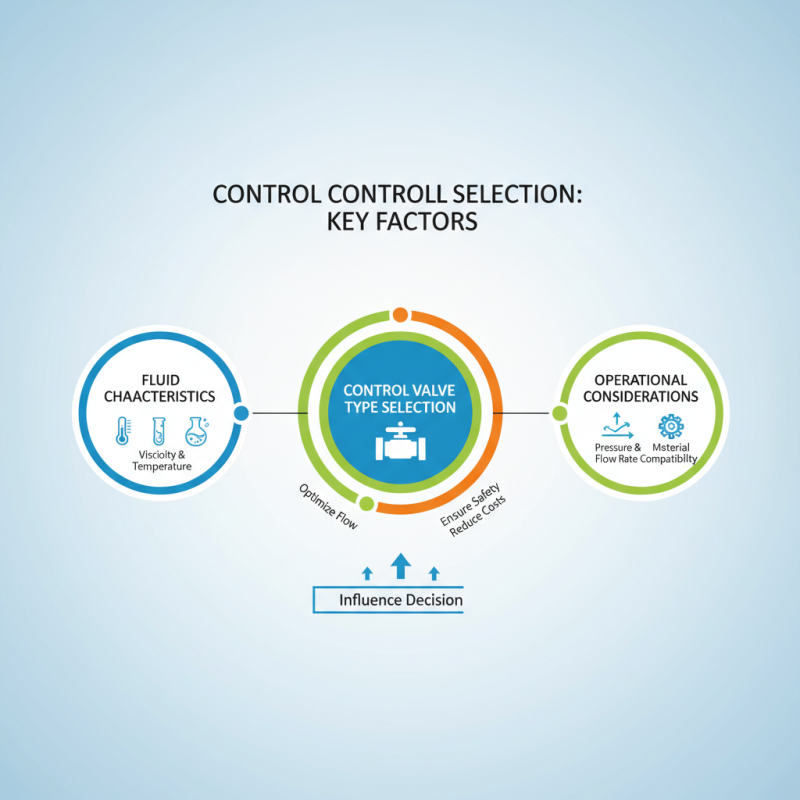
Selecting the right control valve type is crucial in various industries. Several factors can influence this decision. First, the fluid characteristics play a significant role. Viscosity, temperature, and corrosiveness all affect valve performance. For example, high-viscosity fluids might require specialized valves for optimal flow control.
Another important factor is the pressure and flow conditions. The operational environment can dictate which valve type is most suitable. For instance, high-pressure systems may benefit from robust, durable valves. On the other hand, low-pressure systems might use simpler designs. It’s essential to consider these conditions carefully and not overlook them.
Size and installation space are also critical. Some systems may have limited space, impacting the choice of valve. Specific projects might require compact designs, while others may prioritize ease of maintenance. Balancing these factors can be challenging. Questions often arise: Is the chosen valve truly the best option? Are we sacrificing performance for cost? Reflecting on these choices can lead to better decision-making in the long run.
Future Trends in Control Valve Technology and Applications
The control valve industry is evolving rapidly. New technologies are shaping future applications. According to a recent market report, the global control valve market is projected to reach $13.4 billion by 2026. This growth indicates a rising demand for advanced technologies in various sectors.
One significant trend is the integration of IoT. Smart valves collect real-time data, enabling better operational insights. This allows for predictive maintenance and reduces downtime. The Enhanced Data Analytics report highlights that predictive maintenance can cut operational costs by up to 30%. Yet, many companies struggle with implementing this technology effectively.
Another trend is the increased focus on sustainability. Eco-friendly materials are becoming essential. Many factories are shifting towards greener processes. For instance, using non-toxic elastomers improves safety and reduces environmental impact. However, companies face challenges in balancing cost and sustainability. Some still prioritize cheaper options over quality. This approach may lead to long-term inefficiencies. The future of control valves will undoubtedly involve a delicate dance between innovation and practicality.

 More
More