
China Top 10 Dust Proof Mask Manufacturers for Global Buyers

For global buyers, finding a capable Dust Proof Mask manufacturer involves more than comparing prices or browsing polished product photos. A mask may look sturdy on a screen, yet its seal, strap tension, and nose clip determine how it feels during a full shift. Fit matters. In dusty workshops, construction sites, and packing areas, small design choices can affect comfort and consistent use. This guide introduces ten Chinese manufacturers for buyers seeking potential sourcing partners. It offers a starting point, not a substitute for checking each supplier directly.

When comparing manufacturers, examine product specifications, filtration claims, material details, sample quality, production capacity, and order lead times. Ask for current test reports and relevant certifications, then confirm that documents match the exact model being discussed. Check the seams. Request samples and assess how the mask sits across different face shapes; one person’s comfortable fit may not work for another. Clear communication about packaging, customization, minimum order quantities, and quality checks also helps prevent surprises after an order is placed. Not every claim is equally clear. Even an experienced buyer can miss a detail when comparing many offers, so keep questions specific and records organized. The manufacturers featured here may differ in product range, scale, and export experience. Use the list to narrow your options, then verify details before making a purchasing decision.
China Top 10 Dust Proof Mask Manufacturers for Global Buyers

Dust-Proof Masks: Types, Uses, and Key Performance Features

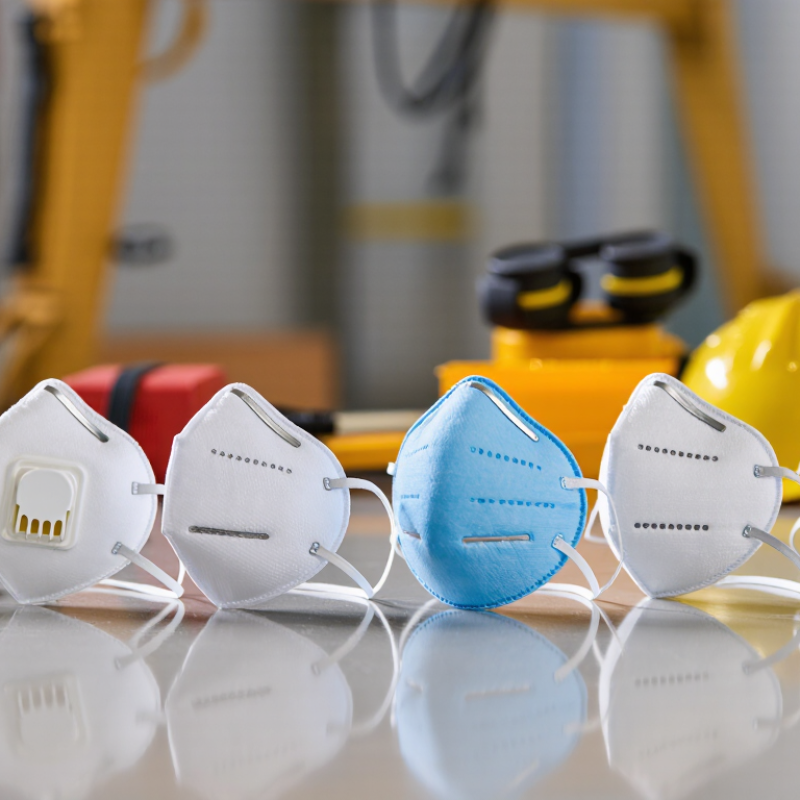
Dust-proof masks are designed to reduce inhalation of airborne particles, not every workplace hazard. Disposable cup-shaped and fold-flat models suit short tasks such as sanding wood or sweeping dry debris. Reusable masks with replaceable particulate filters may be more practical for repeated work. Fit matters. A mask that gaps beside the nose can let dust bypass its filter.

Performance depends on more than the filter rating. Look for clear filtration information, secure straps, a moldable nose piece, and breathing resistance that workers can tolerate through a full shift. In a workshop, check that the mask stays sealed while the wearer turns, speaks, or bends over a bench. Facial hair along the sealing edge can compromise fit. Where workplace rules require it, fit testing and a respiratory-protection program help confirm suitability.

Dust varies. Fine mineral particles, wood dust, and nuisance debris do not present identical risks, and a particulate mask does not protect against gases or vapors. Match the mask to a documented hazard assessment and follow its care instructions. Choosing one is less tidy than a product chart suggests; comfort, fit, and task duration can change what works in practice.

Dust-Proof Masks: Types, Uses, and Key Performance Features

A standards-based comparison of minimum filter efficiency for selected particulate respirator classes.

N95 and KN95 classes specify at least 95% filtration under their respective standards. EN 149 defines FFP1, FFP2, and FFP3 classes at minimum filtration efficiencies of 80%, 94%, and 99%. Test methods and certification requirements differ, so these values should not be treated as a direct ranking or a guarantee of real-world protection. Fit and correct use also matter.

China’s Dust-Proof Mask Manufacturing Landscape

China’s Dust-Proof Mask Manufacturing Landscape

China’s manufacturing base spans spunbond and melt-blown materials, molded cup masks, folding designs, and reusable respirators. Suppliers differ in filtration testing, fit evaluation, documentation, and production consistency. A low unit price can hide uneven nose-clip sealing or weak strap attachment. Details matter on a dusty worksite.

Demand is shaped by construction, mining, metalworking, and other dusty operations. The WHO/ILO joint report, Global Monitoring Report on Workers’ Health (2021), estimated 1.9 million work-related deaths worldwide in 2016. This broad figure is not specific to dust or masks, but it underlines the need for serious exposure controls. For buyers, factory audits and independent test reports offer stronger evidence than catalog claims. China’s scale can support varied order sizes, yet supplier capability should be checked model by model. Experienced buyers also compare inspection frequency, reject rates, and repeat-order lead times.

Tips: Request filtration and fit-test records for the exact model, not a generic certificate. Confirm labeling, batch traceability, and sample-to-bulk consistency. Test a few units in real working conditions. Paperwork can miss poor comfort.

How to Evaluate Chinese Dust-Proof Mask Manufacturers

China Top 10 Dust Proof Mask Manufacturers for Global Buyers

How to Evaluate Chinese Dust-Proof Mask Manufacturers

A low unit price means little if masks fit poorly or test results cannot be traced to production batches. The ILO’s 2023 global estimates report 2.93 million work-related deaths and 395 million non-fatal work injuries annually. These figures underline why buyers should assess protective equipment carefully, not treat it as a commodity. Request current filtration and breathing-resistance reports from an independent laboratory, then check that the tested model matches the product being offered. NIOSH defines N95 respirators by a minimum 95% filtration efficiency under its test conditions; buyers should verify the applicable standard and certification for their destination market. Paperwork is not proof.

Tips: Ask for batch traceability, material specifications, and recent quality-control records. During a factory audit, compare samples from different production dates and inspect nose clips, straps, and edge seals. Ask how defects are handled, and confirm production capacity against your forecast. A polished showroom can impress, but it cannot show everyday consistency. I would also ask for a clear change-control process; suppliers do not always volunteer when materials or subcontractors change.

Profiles of 10 Leading Chinese Dust-Proof Mask Manufacturers

Profiles of 10 Leading Chinese Dust-Proof Mask Manufacturers

A useful buyer’s shortlist should compare capabilities, not just price. These ten profiles represent different strengths found among Chinese manufacturers: high-volume production, custom sizing, molded-cup designs, flat-fold masks, private-label services, export packaging, material testing, automated assembly, small trial orders, and technical support. They are comparison profiles, not a verified ranking of named factories. That distinction matters.

Some suppliers may offer clear test records and stable production controls; others may provide limited documentation. Ask for current product specifications, filtration-test details, sample consistency, and written lead times. Check whether samples match the production units. A polished catalogue proves little. Even experienced buyers can overlook small differences in nose-clip fit or strap tension, so assess comfort and fit with intended users before placing a large order.

Tips: Request recent test reports and confirm the tested model matches the one quoted. Compare samples under the same conditions. Keep written records of specifications, packaging, and defect limits. A low unit price can hide extra costs, and supplier claims still need independent checking.

Global Sourcing, Certification, and Import Considerations

Global sourcing of dust masks starts with the intended hazard, not the catalogue photo. Confirm whether a product is a certified respirator or a general-purpose face covering; the terms are not interchangeable. NIOSH’s 42 CFR Part 84 criteria require N95 filters to achieve at least 95% efficiency under a specified test. That result does not guarantee a seal on every face. OSHA’s respiratory-protection standard requires fit testing before initial use and at least annually for tight-fitting respirators.

For European buyers, EN 149 classifies FFP2 filters at a minimum 94% efficiency under its own test method. Do not treat that figure as directly comparable with N95 results. Ask suppliers for current certificates, complete test reports, product labels, and traceable lot records. Check that the named factory and exact model match across documents. Small gaps matter. A certificate for a similar model may not cover the goods being shipped.

Import checks are country-specific. Confirm the applicable standard, registration rules, labeling language, tariff classification, and required customs documents with the destination authority or a qualified broker. Request pre-shipment samples and inspect packaging, model markings, and batch numbers against the purchase order. Paperwork is not proof. I would also budget time for document review; rushed sourcing can leave a buyer with compliant-looking masks and unresolved evidence.

China Top 10 Dust Proof Mask Manufacturers for Global Buyers - Global Sourcing, Certification, and Import Considerations

Buyer comparison framework: the ten rows below are sourcing and verification criteria, not a ranked list of named manufacturers. Product approvals and import rules depend on the exact model, intended use, and destination market.

No. Buyer evaluation area What to verify Useful evidence or reference Global sourcing and import consideration
1 Intended use and product type Clarify whether the product is an occupational particulate respirator, a general-purpose mask, or a medical face mask. These categories have different performance and regulatory requirements. Product specification, intended-use statement, labeling, and applicable market rules. Do not assume that a product marketed as a “dust mask” is approved for every workplace, medical, or public-health use.
2 Chinese standard claims For products claiming compliance with China’s GB 2626-2019, check the stated classification and confirm that the test evidence applies to the exact product model. GB 2626-2019 is China’s standard for respiratory protective equipment—self-priming filtering particulate respirators. Ask for the complete test report and model details. A Chinese standard claim does not, by itself, establish approval under EU, US, or other destination-market requirements.
3 EU requirements For an EU PPE claim, check the applicable conformity assessment, product documentation, labeling, and ongoing production-surveillance requirements. EN 149:2001+A1:2009 covers filtering half masks to protect against particles and includes FFP1, FFP2, and FFP3 classifications. Request the EU declaration of conformity and relevant notified-body documentation. Check that certificates and reports identify the same manufacturer, model, and configuration as the goods being ordered.
4 US NIOSH approval If a respirator is offered as NIOSH-approved, verify its approval number, approved manufacturer, and exact model. Check the NIOSH Certified Equipment List and the approval label. NIOSH approval is governed by the applicable US respirator approval requirements, including 42 CFR Part 84. A filtration test result or a “N95-like” description is not a substitute for verifying an actual NIOSH approval.
5 Certificate and report authenticity Confirm the issuing body, report number, test date, scope, model identification, and whether the document can be independently verified. Full laboratory reports and certificates, with consistent product and manufacturer details across documents. A certificate for a similar-looking product or a different factory does not automatically cover the shipment under negotiation.
6 Product performance and fit Review the claimed filtration performance alongside breathing resistance, fit, leakage, strap design, and intended wear conditions. Applicable standard test results, samples, product drawings, and user instructions. For workplace use, product selection and fit-testing obligations depend on the destination country and employer’s respiratory-protection program.
7 Quality management and production controls Assess incoming-material checks, process controls, finished-product inspection, nonconformance handling, and traceability. Quality procedures, audit records, inspection plans, and any current quality-management-system certificate within its stated scope. ISO 9001 certification concerns a quality management system; it is not, by itself, product approval or proof of respirator performance.
8 Batch traceability and change control Check whether each batch can be traced and whether changes to materials, tooling, production location, or design are documented and controlled. Batch codes, production records, change-control procedures, and a written process for notifying buyers of material changes. Define approval requirements for substitutions in the purchase contract, particularly where the product is tied to a certification or regulatory submission.
9 Packaging, labeling, and shipping Confirm packaging protects the goods in transit and that labels and user information meet the requirements of the destination market. Approved artwork, carton specifications, packing list, commercial invoice, and shipment documents. Agree on language, importer details, product markings, carton quantities, Incoterms, and responsibility for freight and insurance before production.
10 Import classification and landed cost Determine the correct tariff classification and confirm applicable duties, taxes, customs documentation, and any product-specific import controls. Destination-country customs guidance and advice from a qualified customs broker based on the product’s construction and intended use. Do not rely on a generic HS code: classification and duty treatment can vary by jurisdiction and product details. Verify requirements before placing a bulk order.

Practical note: request samples and product-specific documents before approving production. Confirm all regulatory and customs requirements with the relevant authorities or qualified advisers in the destination market.