
China Top Walk In Humidity Chamber Supplier?

China has become a significant manufacturing base for environmental test equipment. MarketsandMarkets reports continuing growth in the environmental test chambers market, driven by electronics, automotive, battery, and aerospace testing. These sectors increasingly require stable temperature and humidity control. A Walk In Humidity Chamber supports larger assemblies, battery packs, vehicle components, and production samples.

Real performance is more practical than a brochure suggests. Engineers inspect humidity uniformity, recovery time, air circulation, and condensation control. A chamber may be rated at 85% relative humidity, yet poor loading can create dry corners. Door seals matter. So does drainage. These details affect repeatability during long test cycles. IEC 60068-3-6 provides guidance for steady-state damp heat testing, while ISO/IEC 17025 supports reliable laboratory calibration and measurement practices.

China Top Walk In Humidity Chamber Supplier? The answer should involve more than price or factory size. Buyers should review temperature and humidity mapping data, controller accuracy, calibration certificates, insulation materials, and after-sales response times. Reports from Grand View Research also show expanding demand for environmental testing across advanced manufacturing applications. However, market growth does not prove every supplier’s capability.

No supplier is perfect. That assumption needs testing. A credible manufacturer should explain its limits, not hide them. Factory visits, sample testing, reference projects, and documented acceptance criteria can reveal important differences. The best selection combines engineering experience, verified data, and realistic service commitments. A lower quotation may look attractive, but unstable humidity can cost more than the chamber itself.
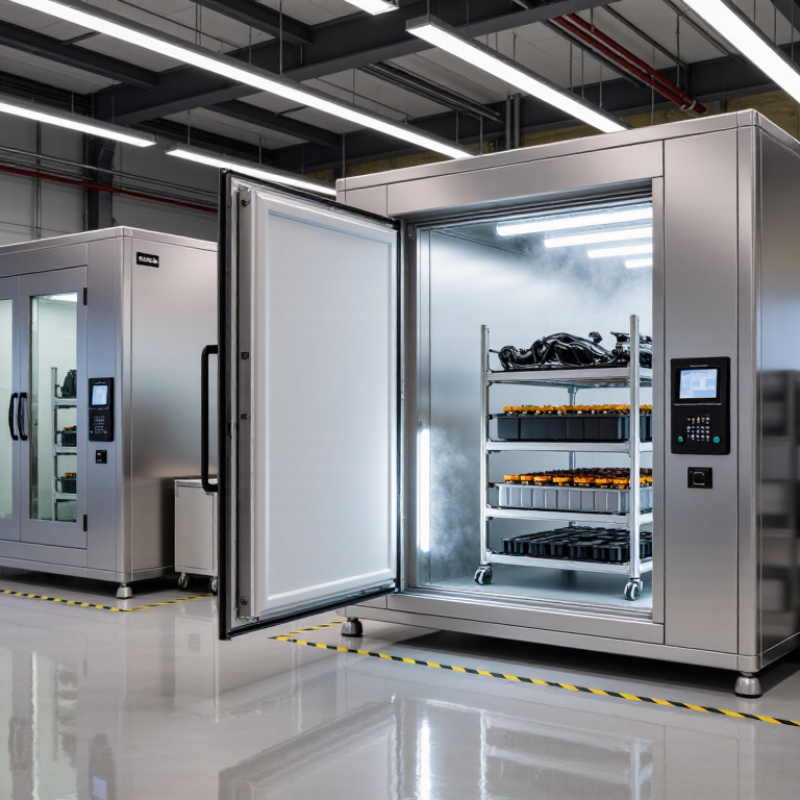
China Top Walk In Humidity Chamber Supplier?

Walk-In Humidity Chambers: 10–95% RH Control and ±2% RH Stability

Walk-In Humidity Chambers: 10–95% RH Control and ±2% RH Stability

A reliable walk-in humidity chamber must control moisture across a wide range, from 10% to 95% RH. This range supports materials testing, electronics evaluation, packaging studies, and environmental qualification. In daily operation, stable humidity matters more than a fast display response. A useful system holds the setpoint within ±2% RH after temperature and product loads reach equilibrium.

Performance From hands-on chamber checks, airflow design strongly affects actual performance. A sensor may show 50% RH, while a crowded corner reads differently. Proper circulation, insulated panels, and a well-sealed door reduce these gradients. The control system should also include calibrated temperature and humidity sensors, automatic water management, and alarms for abnormal conditions. Small details matter.

Verification Not every chamber performs perfectly. A large test load can delay recovery after door opening. Frequent access may create short-term variations beyond ±2% RH. That is normal, but the recovery time should be documented rather than hidden. Supplier evaluation should include mapping reports, calibration records, maintenance guidance, and factory acceptance testing. Independent verification is wise. A clear test method builds confidence, especially when the chamber operates near 10% RH or 95% RH. Even experienced teams sometimes underestimate cleaning needs and sensor drift. Regular inspection keeps the displayed reading connected to real conditions.

Temperature Ranges of −40°C to +150°C for Environmental Testing

China Top Walk In Humidity Chamber Supplier?

Temperature Ranges of −40°C to +150°C for Environmental Testing

A walk-in humidity chamber should manage more than temperature. It must control moisture, airflow, stability, and recovery after the door opens. A range from −40°C to +150°C supports demanding environmental tests for electronics, vehicles, materials, and industrial components. At low temperatures, frost can affect sensors and door seals. At high temperatures, insulation and circulation become critical.

Experienced testing teams check chamber performance under real workloads. They place temperature sensors at several positions, not only near the controller. They also verify humidity uniformity with loaded shelves and large test assemblies. At −40°C, relative humidity control may become limited because air holds very little moisture. This detail is often overlooked. It should be explained clearly before equipment selection.

A reliable supplier should provide calibration records, safety functions, maintenance guidance, and documented test data. Ask how quickly the chamber recovers after opening the door. Ask about compressor protection, water quality, floor loading, and data export. Standards such as IEC 60068 or ISO 16750 may guide test planning, depending on the application. However, one specification rarely proves actual performance. Factory demonstrations help, but site acceptance testing remains necessary. Chamber size is easy to compare. Long-term stability is harder.

China Top Walk-In Humidity Chamber Supplier? Temperature Ranges of −40°C to +150°C for Environmental Testing

Representative temperature profile for environmental testing in a walk-in humidity chamber.

The profile covers common environmental test setpoints from −40°C to +150°C, including cold storage, ambient conditioning, elevated-temperature testing, and high-temperature exposure. Actual test duration, humidity level, ramp rate, and stabilization requirements should be defined according to the applicable product specification or test standard.

Key Standards: IEC 60068, GB/T 2423, and ISO 9001 Certification

China Top Walk-In Humidity Chamber Supplier?

Choosing a walk-in humidity chamber supplier requires more than checking chamber size or heating power. IEC 60068 defines environmental test methods for temperature, humidity, condensation, and durability. GB/T 2423 provides related Chinese testing procedures and acceptance conditions. A capable supplier should explain how each requirement becomes a verified test program.

Ask for calibration records, sensor accuracy, uniformity maps, and door-sealing test results. Check whether the control system records temperature and relative humidity continuously. ISO 9001 certification indicates a controlled quality system, but it does not prove chamber performance by itself. Request traceable calibration and factory acceptance data. Small details matter. However, documentation can still contain gaps, especially when project changes are made late. Review every revision carefully.

Tips: Compare the supplier’s test reports with your actual product profile. Confirm ramp rates, humidity limits, usable workspace, drainage, and maintenance access. Visit the production site if possible. Observe wiring, insulation, and safety controls rather than relying only on photographs. A strong supplier should discuss risks openly and admit technical limits. That honesty is useful. Also, ask how failures are handled after installation, because response time and spare-part planning affect long-term reliability.

How to Compare Capacity, Uniformity, Recovery Time, and Energy Efficiency

Choosing a top walk-in humidity chamber supplier requires more than comparing chamber size. Capacity should match your largest test load, including racks, cables, and airflow clearance. An oversized chamber may waste energy and extend recovery time. A tight layout can create uneven temperature and humidity zones.

Ask for uniformity data under realistic conditions, not only empty-chamber results. A reliable supplier should explain sensor locations, test loads, calibration methods, and acceptable tolerances. Recovery time matters after door openings. For example, observe how quickly the chamber returns to 85% relative humidity after a three-minute access period. Energy efficiency also deserves measurement. Review insulation thickness, compressor control, dehumidification design, and standby consumption. Lower power use is valuable, but weak recovery performance may increase total testing time.

Tips: Request a witnessed performance test with your actual product fixtures. Record capacity, uniformity, recovery time, and energy use together. Check service response, spare-part availability, and calibration support before signing. Ask for operating data at both low and high humidity levels.

In practice, supplier documents can look precise while hiding important conditions. I once found that “fast recovery” excluded the test load. That detail changed the comparison completely. A chamber may pass a factory test yet perform differently in a busy laboratory. Leave space for maintenance, future fixtures, and human movement. Capacity is not just internal volume. It is usable, stable working space.

Selecting China’s Top Supplier Through Factory Audits, Warranty, and Service

Choosing China’s top walk-in humidity chamber supplier requires more than comparing prices. A factory audit should verify design control, welding quality, insulation thickness, and electrical safety. Ask to inspect a running chamber, not only a polished showroom unit. Check temperature and humidity mapping records under IEC 60068-3-6 guidance. Small gaps matter.

ISO’s 2023 Survey recorded more than 1.26 million ISO 9001 certificates worldwide. Certification helps, but it does not replace direct evidence. Review calibration records, test procedures, corrective-action reports, and staff training. An ISO/IEC 17025-accredited laboratory should support instrument calibration where possible. Auditors should also trace one chamber from raw materials to final inspection. Paperwork can look perfect. Production reality may disagree.

Warranty terms deserve equal attention. Request clear coverage for controllers, sensors, compressors, seals, and labor. A useful agreement states response times, remote diagnosis steps, replacement-part availability, and on-site support costs. Ask for service records from comparable installations, with customer details properly protected. A two-year warranty sounds strong until exclusions appear. Include acceptance testing, humidity recovery limits, and annual maintenance responsibilities in the contract. Service quality is often judged after failure, not during sales. That is where supplier claims become measurable.

China Top Walk In Humidity Chamber Supplier? - Selecting China’s Top Supplier Through Factory Audits, Warranty, and Service
Supplier-neutral evaluation matrix for walk-in temperature and humidity chambers. The benchmarks below are procurement reference criteria and should be verified through original documents, factory audits, witnessed testing, and contract terms.
Evaluation Area Factory Audit Checkpoint Required Evidence Reference Acceptance Benchmark Weight Score
Quality Management Review the documented quality system, inspection procedures, nonconformance control, and corrective-action records. Current quality-management certificate, internal audit records, inspection forms, and corrective-action samples. A documented quality system with traceable incoming, in-process, and final inspection records. Certificate validity and scope must cover the manufacturing activity. 10% 0–10
Manufacturing Capability Verify whether the supplier performs enclosure fabrication, insulation, electrical assembly, refrigeration assembly, and final integration under controlled conditions. Factory tour, production-flow map, equipment list, capacity records, and photographs or video of the actual production areas. Dedicated production areas, identifiable process ownership, controlled material handling, and sufficient space for the chamber size and project schedule. 12% 0–12
Technical Design Assess the chamber design for temperature uniformity, humidity control, air circulation, drainage, access, lighting, and maintainability. Approved drawings, heat-load calculations, control-system description, component list, wiring diagrams, and maintenance layout. Design documentation must define the working volume, temperature and humidity range, allowable loading, air-flow concept, safety devices, and maintenance access. 14% 0–14
Performance Verification Witness testing at representative set points and loading conditions, including stabilization, uniformity, recovery, and continuous operation. Factory acceptance test plan, calibrated measurement records, temperature and humidity mapping results, alarm test records, and final test report. Acceptance limits must be agreed before production. Test instruments should have current calibration traceable to recognized national or international standards. 16% 0–16
Standards & Safety Check electrical safety, emergency-stop functions, over-temperature protection, door safety, refrigerant handling, and control-panel protection. Risk assessment, electrical drawings, safety-test records, applicable conformity documents, and operating instructions. Safety functions must be documented and tested. Applicable requirements may include electrical laboratory-equipment safety, electromagnetic compatibility, local electrical codes, and destination-market regulations. 12% 0–12
Calibration & Traceability Review calibration control for temperature, relative humidity, pressure, and electrical test instruments used during production and acceptance testing. Calibration certificates, instrument register, calibration intervals, uncertainty information, and out-of-tolerance procedures. Critical instruments must be uniquely identified, within calibration validity, and supported by records showing measurement traceability. 8% 0–8
Warranty Coverage Examine the warranty period, covered parts, exclusions, labor responsibility, software coverage, and transport arrangements for warranty repairs. Signed warranty certificate, contract warranty clause, spare-parts policy, exclusions list, and escalation procedure. Use a clearly defined minimum warranty term, with separate coverage for major systems such as the controller, sensors, refrigeration system, heating system, humidification system, and chamber structure. 10% 0–10
After-Sales Service Evaluate technical support hours, remote troubleshooting, spare-parts availability, field-service capability, and escalation management. Service organization chart, support contact list, response-time commitment, service records, spare-parts list, and technician qualification records. Contractual service levels should define acknowledgement time, troubleshooting time, replacement-part lead time, and the process for unresolved technical issues. 10% 0–10
Documentation & Training Verify the completeness and language quality of operating, maintenance, electrical, software, and troubleshooting documentation. User manual, maintenance manual, wiring diagrams, spare-parts manual, software backup, training agenda, and training attendance record. Documentation should match the delivered equipment, include safety warnings and preventive-maintenance instructions, and be supplied before commissioning or handover. 5% 0–5
Delivery & Project Control Assess engineering change control, production milestones, packaging, shipping preparation, installation planning, and commissioning responsibility. Project schedule, approved drawings, change-request log, packing specification, installation plan, and commissioning checklist. Milestones, customer approvals, delivery conditions, site requirements, installation scope, and acceptance criteria must be documented before order release. 3% 0–3
Total Supplier Evaluation Score 100% 0–100