2026 Best Types of Industrial Strainers for Global Buyers

Choosing the right industrial strainers in 2026 requires more than comparing catalog photos and nominal pipe sizes. Global buyers must connect equipment design with real operating conditions. A strainer handling cooling water faces different demands from one protecting a high-pressure pump or filtering viscous process fluid. Flow rate, particle size, pressure loss, temperature, corrosion risk, and cleaning access all influence the final choice.

This guide examines common options, including Y strainers, basket strainers, duplex strainers, temporary cone strainers, wedge wire designs, and automatic self-cleaning units. Each type offers practical advantages, but none is ideal for every plant. A duplex model may reduce process interruptions, while a simple Y strainer may suit compact utility lines. Small details matter. A poorly positioned drain can turn routine maintenance into a messy shutdown. A fine screen can improve protection, yet it may clog faster than expected.

Reliable purchasing decisions should combine operating experience, engineering calculations, supplier documentation, and verified performance data. Buyers should review material compatibility, screen strength, spare-part availability, pressure ratings, and service support before approval. Independent inspection and clear test records can also strengthen confidence, especially for international projects with different technical expectations. However, written specifications are not perfect. Field conditions often expose assumptions that looked reasonable during design. This article therefore compares industrial strainers through both technical evidence and practical maintenance concerns. The goal is not to name one universal winner. It is to help global buyers select equipment that performs consistently, remains serviceable, and fits the actual process.

2026 Best Types of Industrial Strainers for Global Buyers

Industrial Strainers: Purpose, Structure, and Operating Principles

Industrial strainers are mechanical barriers that protect pumps, valves, heat exchangers, and process instruments from solid debris. Unlike fine filters, they usually remove larger particles without demanding high energy input. Their value is practical: fewer blocked passages, less component damage, and more stable flow. A clean screen creates limited pressure loss. As debris accumulates, differential pressure rises. That signal matters. The U.S. Department of Energy’s Improving Pumping System Performance sourcebook reports that pumping systems can consume about 25% of industrial electricity, so unnecessary resistance deserves attention.

The basic structure The basic structure includes a pressure-rated body, removable cover, perforated basket or wedge-wire screen, drain connection, and sometimes pressure-tapping points. Y strainers suit compact lines and moderate debris loads. Basket strainers hold more contamination and support easier cleaning. Duplex designs allow one chamber to operate while the other is serviced. Automatic self-cleaning units use backwashing or mechanical scraping, but they add controls and maintenance points. Simple is often stronger.

Operating principle Operating principle remains straightforward. Fluid enters the body, passes through the screen, and exits after solids are retained. Operators should monitor pressure drop, not guess from appearance. The Hydraulic Institute’s pump-system guidance also emphasizes reducing avoidable friction losses. In practice, an oversized screen may waste space, while an undersized one clogs quickly. That trade-off is easy to underestimate. A strainer is not maintenance-free. Poor access, wrong mesh selection, or delayed cleaning can defeat an otherwise sound design.
Key Industrial Strainer Types and Their Distinctive Features

2026 Best Types of Industrial Strainers for Global Buyers

Key Industrial Strainer Types and Their Distinctive Features

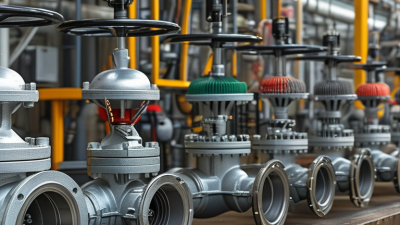
Industrial strainers protect pumps, valves, meters, and heat exchangers from damaging solids. Their design should match fluid viscosity, particle size, pressure, and cleaning access. In field inspections, basket strainers often suit pipelines carrying moderate debris. They provide a larger filtering area and simpler maintenance. Operators can remove the basket, wash it, and check damage quickly. Duplex strainers support continuous flow because one chamber remains active during cleaning. This matters in water treatment, chemical processing, and cooling systems.

Y-strainers offer a compact option for smaller pipelines and limited installation space. Their angled body can trap particles effectively, but cleaning may require partial line isolation. T-strainers handle higher flow volumes and deeper baskets. They are useful where pressure loss must remain controlled. Temporary cone strainers protect new equipment during commissioning. However, they should not stay installed longer than necessary. That mistake happens.

Automatic self-cleaning strainers reduce manual intervention in demanding systems. They use backwashing or mechanical cleaning, depending on the design. Buyers should examine screen material, mesh opening, housing alloy, gasket compatibility, and maximum pressure. A finer mesh does not always mean better performance. It can increase pressure drop and cleaning frequency. Experienced engineers also review flow direction, drain placement, spare screens, and inspection records. No type is perfect. A reliable selection balances filtration accuracy, operating cost, maintenance time, and the fluid’s real behavior. Lab data helps, but site conditions can still prove different.

How to Match Strainer Designs with Industrial Applications

2026 Best Types of Industrial Strainers for Global Buyers

How to Match Strainer Designs with Industrial Applications

Choosing an industrial strainer starts with the process, not the catalog. A basket strainer suits pipelines needing regular debris removal. Its cover should open safely within the available maintenance space. A Y-strainer works well on compact lines with moderate contamination. However, its drain position can complicate cleaning. Check it carefully.

Duplex strainers support continuous flow during basket servicing. They are useful for pumps, cooling systems, and production lines that cannot stop easily. Temporary strainers protect new equipment during commissioning. They are not a permanent solution. Automatic self-cleaning designs reduce manual labor in high-flow systems, but they require correct control settings and reliable discharge arrangements.

Screen size must match the smallest harmful particle, not simply the visible dirt. Fine mesh increases pressure loss. Measure differential pressure during normal and peak flow conditions. Material selection also matters. Stainless steel may resist many process fluids, while softer metals can fail in abrasive service. Confirm temperature, pressure, chemical compatibility, and gasket performance before purchase. In field experience, an apparently oversized strainer may still clog quickly when upstream piping sheds rust. That detail is easy to miss. A practical selection review should include maintenance access, spare baskets, inspection frequency, and the operator’s cleaning habits. Paper calculations help, but actual site conditions often challenge them.

2026 Best Types of Industrial Strainers for Global Buyers - How to Match Strainer Designs with Industrial Applications

Practical comparison of common industrial strainer designs, typical operating ranges, and application-fit considerations

Strainer Type Operating Principle Typical Filtration Range* Typical Pressure Capability* Best-Fit Applications Main Advantages Key Limitations
Y-Strainer A compact angled body holds a removable perforated screen or mesh basket. About 20–3,000 μm, depending on screen construction Commonly used in moderate- to high-pressure piping; exact rating follows the body design and applicable standard. Steam, water, compressed air, fuel, cooling-water lines, and pump protection Small footprint, low purchase cost, simple installation, and broad size availability Limited dirt-holding capacity; cleaning usually requires line isolation or depressurization
Basket Strainer A large cylindrical or basket-shaped element captures solids as fluid passes through it. About 25–5,000 μm; perforated plates are generally coarser than woven mesh Often selected for low- to medium-pressure process and utility lines; rating depends on housing, cover, and element. Oil, chemicals, water treatment, process fluids, and large pump or heat-exchanger lines High dirt capacity, low maintenance frequency, and convenient element removal Requires access space above or beside the housing; flow must normally be stopped during cleaning
Duplex Basket Strainer Two parallel strainer chambers use a changeover valve to direct flow through one chamber while the other is cleaned. About 25–5,000 μm, subject to basket selection Available across a wide range of process pressures; final capability is determined by the pressure class and design code. Continuous-duty lubrication, fuel, hydraulic, cooling, and process-fluid systems Allows online cleaning and element inspection with minimal process interruption Higher cost, larger envelope, and more valves or controls than a simplex unit
Simplex Strainer A single chamber contains the screening element and is isolated for manual cleaning. About 25–5,000 μm Common in low- to medium-pressure services; confirm the specified design pressure before purchase. Intermittent process lines, utility water, general fluid transfer, and non-critical equipment protection Simple layout, lower cost, easy troubleshooting, and fewer moving parts The line generally needs to be shut down or bypassed for cleaning
T-Strainer A straight-through or right-angle body houses a removable screen basket in a larger chamber. About 25–5,000 μm Used in medium- and high-flow systems; pressure rating varies with body configuration and material. Large-diameter pipelines, marine systems, cooling-water circuits, and industrial utilities High flow capacity, relatively low pressure drop, and large element area Heavy and space-consuming; maintenance access must be planned during layout
Temporary Cone Strainer A conical screen is installed between flanges to collect construction debris during commissioning or short-term operation. About 150–5,000 μm, depending on mesh or perforation Selected to match the connected piping flange and system design pressure. New pipelines, pump start-up, flushing operations, and commissioning protection Inexpensive, lightweight, and effective for removing welding slag, scale, and installation debris Not intended for long-term service; can clog quickly when debris loading is high
Self-Cleaning Strainer A motorized brush, scraper, suction scanner, or reverse-flow cycle removes accumulated solids automatically. About 25–3,000 μm, depending on screen technology Typically applied to low- and medium-pressure systems; backwash pressure and flow must be available where required. Cooling towers, irrigation, wastewater reuse, intake water, and continuous process lines Reduces manual cleaning, supports continuous operation, and can maintain more stable pressure drop Higher capital cost, control requirements, and sensitivity to unsuitable solids or poor installation
Backwash Strainer A controlled reverse-flow or suction process dislodges solids from the screen without routine manual removal. About 20–3,000 μm Usually specified for continuous low- to medium-pressure water and process services. Raw water, cooling water, membrane prefiltration, and automated utility systems Automatic operation, reduced downtime, and suitability for high-throughput water systems Needs a drain or waste connection and may require additional backwash water or pressure
Magnetic Strainer Permanent magnets attract and retain ferrous particles, often combined with a conventional screen. Captures magnetic ferrous particles; performance depends on particle size, velocity, and magnetic field strength Pressure capability is governed by the housing and the selected magnetic assembly. Metalworking fluids, hydraulic oil, lubricants, and systems vulnerable to iron contamination Targets ferrous wear particles that ordinary screens may not retain efficiently Does not remove non-magnetic solids; magnets require safe handling and periodic cleaning
Steam Separator-Strainer Combines flow-path separation with a screen or vane arrangement to remove condensate and entrained particles from steam. Commonly coarse particle removal; exact filtration depends on the internal screen or separator design Selected according to steam pressure, temperature, and the applicable piping or pressure-equipment requirements. Boiler steam, process steam, steam traps, control valves, and turbine protection Helps reduce wet-steam damage, corrosion products, and particulate contamination downstream Requires correct drainage and insulation; it is not a substitute for fine steam filtration where that is required
Selection Notes: Filtration ranges and pressure capabilities are typical industry ranges rather than universal limits. Final selection should verify fluid compatibility, viscosity, temperature, flow rate, allowable pressure drop, dirt-loading profile, element material, connection standard, design pressure, and applicable local codes. A strainer protects downstream equipment from relatively large particles; it is generally not a replacement for a fine filter or membrane.

Materials, Filtration Ratings, and Performance Requirements

2026 Best Types of Industrial Strainers for Global Buyers

Materials, Filtration Ratings, and Performance Requirements

Material selection starts with the fluid, temperature, and corrosion risk. Carbon steel suits many water and oil services, while stainless steel handles moisture and chemical exposure better. ASTM A351 covers common cast stainless-steel pressure components. For sour service, buyers should also review NACE MR0175 requirements. Material choice is not only about strength. Gasket compatibility matters. A small mismatch can cause early leakage.

Filtration ratings need careful interpretation. A 20-mesh screen does not always equal the same micron opening, because wire thickness changes the result. A 40-mesh screen often provides an opening near 380–450 microns, but suppliers must confirm actual dimensions. Perforated baskets usually offer clearer hole sizes, such as 0.5, 1, or 2 millimeters. ISO 16889 uses beta ratios to evaluate particle removal, although this method is more common for filter elements than simple strainers. A clean micron number can mislead.

Performance depends on flow velocity, open area, and pressure drop. The U.S. Department of Energy’s Pumping System Assessment guidance emphasizes pressure-loss evaluation during equipment selection. Engineers should record clean and dirty differential pressure, not just maximum flow. Duplex strainers support continuous operation during basket cleaning. Useful, but not always necessary. Oversizing may reduce velocity while increasing cost and dead zones. Verify the test medium, temperature, viscosity, and inspection standard before comparing quotations. References: ASTM A351, NACE MR0175, ISO 16889, and U.S. DOE Pumping System Assessment guidance.

2026 Best Types of Industrial Strainers for Global Buyers

Representative Filtration Ratings by Strainer Type

The chart compares representative fine-filtration ratings commonly available for major industrial strainer types. Lower micron values indicate finer particle removal. Actual performance depends on screen or element design, fluid viscosity, flow rate, pressure, temperature, and cleaning method.

Basket and duplex strainers are widely selected where reliable particle retention and service continuity are required. Self-cleaning strainers are preferred for continuous-flow systems, while Y and temporary cone strainers are often used for compact or short-term protection duties.

Global Purchasing Factors: Standards, Maintenance, and Total Cost

Global buyers should treat industrial strainers as risk-control equipment, not simple catalog items. The U.S. Department of Energy’s Operations & Maintenance Best Practices Guide cites estimated savings of 12–18% when preventive maintenance replaces reactive repairs. That figure is not universal. Site conditions change everything.

A reliable purchase specification should state fluid chemistry, temperature, flow rate, pressure drop, mesh size, and cleaning access. Ask for material certificates and test records. Verify pressure-boundary and flange compatibility through applicable requirements, such as MSS SP-124, ASME B16.5, or equivalent EN standards. For replaceable filter elements, ISO 16889 testing can help compare filtration performance, although it does not replace application testing. Small omissions become expensive later.

Maintenance planning deserves equal attention. A basket that requires a crane or line shutdown may erase a low purchase price. Specify a differential-pressure indicator, isolation valves, drain points, lifting clearance, and stocked replacement baskets. The AMPP IMPACT study estimated global corrosion costs at 3.4% of worldwide gross domestic product, or about US$2.5 trillion annually. Strainers cannot prevent all corrosion, but correct alloys and coatings can reduce avoidable exposure. Buyers should compare acquisition, energy loss, labor, disposal, spare parts, and downtime over the equipment’s service life. The cheapest quotation is often incomplete. Recheck every assumption.